
-17640759200799.webp?v=1764075920)
5 min read | Uploaded on March 27, 2026
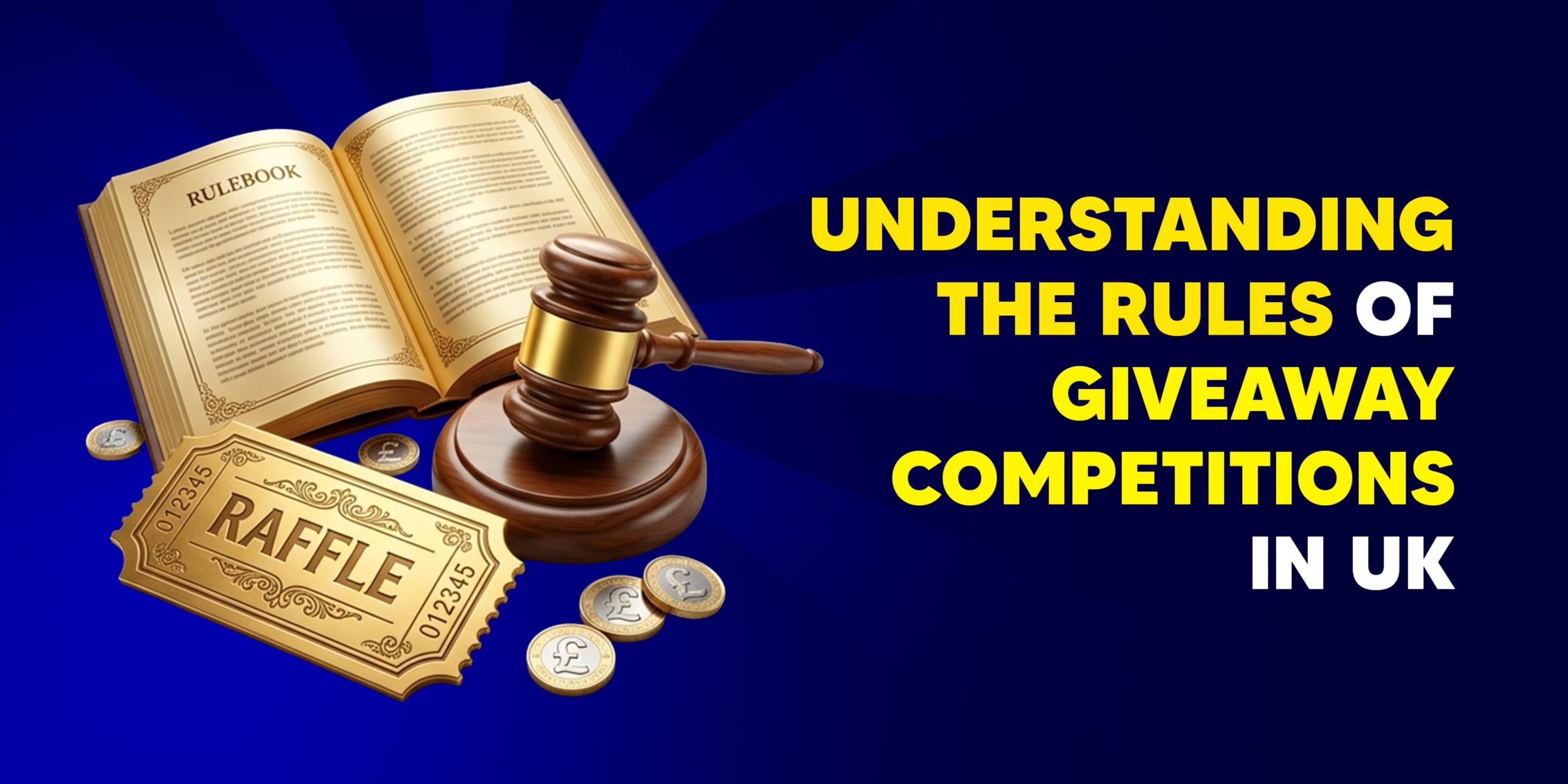
Ever wondered what makes a UK competition legitimate? Or why some giveaways require a "skill question" while others don't?
Understanding the rules behind prize competitions helps you identify trustworthy platforms, avoid problematic promotions, and enter with confidence.
This guide explains how UK competitions are structured legally, what obligations operators must meet, and what you should look for as an entrant.
In the UK, prize promotions fall into different legal categories. The structure determines whether they're regulated, and how.
A free prize draw awards prizes by chance without requiring payment. If there's a paid entry option, there must also be a genuinely free alternative that's equally accessible.
Because no payment is required to enter, free draws aren't regulated as gambling and don't need a licence.
Example: A competition where you can buy entries for £1 each, but can also enter for free by post.
Prize competitions determine winners based on skill, judgement, or knowledge - not pure chance. The skill element must be meaningful; simple multiple-choice questions with obvious answers don't qualify.
When properly structured, prize competitions don't require a gambling licence because winning depends on ability, not luck alone.
Example: A competition where you must answer a question that genuinely tests knowledge, and only correct answers are entered into the draw.
For a promotion to operate legally without a gambling licence, it must either:
Most UK competition platforms use the free entry model - offering paid entries alongside a free postal entry option.
If a competition charges for entries, UK advertising standards require a free entry alternative. Here's what that means in practice:
The free entry option must be displayed as clearly as the paid option - not hidden in small print or buried in terms and conditions.
The free route can't be more expensive or inconvenient than necessary. Standard postal entry (using a regular stamp) is acceptable. Requiring expensive postage, premium phone lines, or complicated processes isn't.
The free route must give entrants the same chance of winning as paid entries. It can't be a token gesture designed to discourage use.
When evaluating a competition, check:
If the free route is hidden, overly complicated, or seems designed to put people off, the competition may not be compliant.
Some competitions include a "skill question" as part of the entry process. This is often a legal requirement.
If a competition wants to charge for entries without offering a free alternative, it must include a genuine skill element. The question must be difficult enough that a significant proportion of entrants answer incorrectly.
Most UK competition platforms opt for the free entry model rather than relying on skill questions. This is simpler and more accessible for entrants.
On Rafflee, we use a straightforward entry system with free postal entry available - no trick questions required.
Ticket caps limit the number of entries available for a competition. This matters because it directly affects your odds of winning.
Legitimate operators:
If a platform regularly extends draw dates or increases ticket caps mid-competition, that's a warning sign. It suggests they prioritise revenue over fairness.
On Rafflee, we never extend draws. When we say the draw is on Friday, it happens on Friday - no matter how many entries have been sold.
Transparent draw procedures are a hallmark of legitimate competitions.
Most prize draws use verified random number generators to select winners. This ensures every valid entry has an equal chance.
Many platforms record their draws or broadcast them live. This removes any doubt about fairness and allows entrants to watch winners being selected.
Some operators use independent adjudicators or third-party systems to oversee draws.
If a platform is vague about how winners are chosen, be cautious.
When you enter a competition, you're sharing personal information. UK data protection rules (GDPR) protect how that information is used.
Use this checklist to evaluate whether a competition is legitimate:
✓ Free entry option Is there a clear, accessible free entry route (usually postal)?
✓ Transparent terms Are the rules, eligibility, closing dates, and draw procedures clearly explained?
✓ Published ticket caps Do you know how many entries are available?
✓ Fair draw procedures Is the winner selection method explained? Are draws recorded?
✓ Published winners Does the platform announce winners with names, photos, or videos?
✓ Real contact details Can you find a phone number, email, and physical address?
✓ No mid-competition changes Does the platform stick to stated draw dates without extensions?
If a promotion fails on multiple points, consider whether it's worth entering.
At Rafflee, we've built our platform to exceed the requirements for legitimate UK competitions. Here's how:
We clearly explain how to enter for free via postal entry. It's not hidden - you'll find it in our terms for every competition.
Every prize is awarded, no matter how many entries are sold. If the competition runs, someone wins. Always.
Draws happen on time, every time. We never extend deadlines to sell more tickets. The draw date is the draw date.
Our winners are selected using verified random systems. Many draws are recorded for transparency.
We announce all winners publicly - with names, photos, and videos. You can see real people winning real prizes.
Every competition shows how many entries are available. You know what you're entering.
We collect only what's needed, protect your information, and comply with UK data protection requirements.
Rafflee is operated by Flutter Entertainment, one of the world's largest entertainment companies. That means governance, accountability, and security you can trust.
Browse competitions on Rafflee →
Understanding the rules behind UK competitions helps you identify trustworthy platforms and avoid problematic promotions.
The key things to look for: clear free entry, transparent terms, published ticket caps, fair draw procedures, and real winner announcements.
Rafflee meets all these standards - and goes further with guaranteed prizes, no draw extensions, and the backing of a global entertainment company.
Browse competitions on Rafflee →







Download Rafflee's .APK file
Use the QR code or link below to start the download
Start installation
Open the downloaded file to start installation and click 'Allow'
Begin using the app
That's it! Enjoy using Rafflee's Android app

 Download .APK ›