
-17640759200799.webp?v=1764075920)
5 min read | Uploaded on March 27, 2026
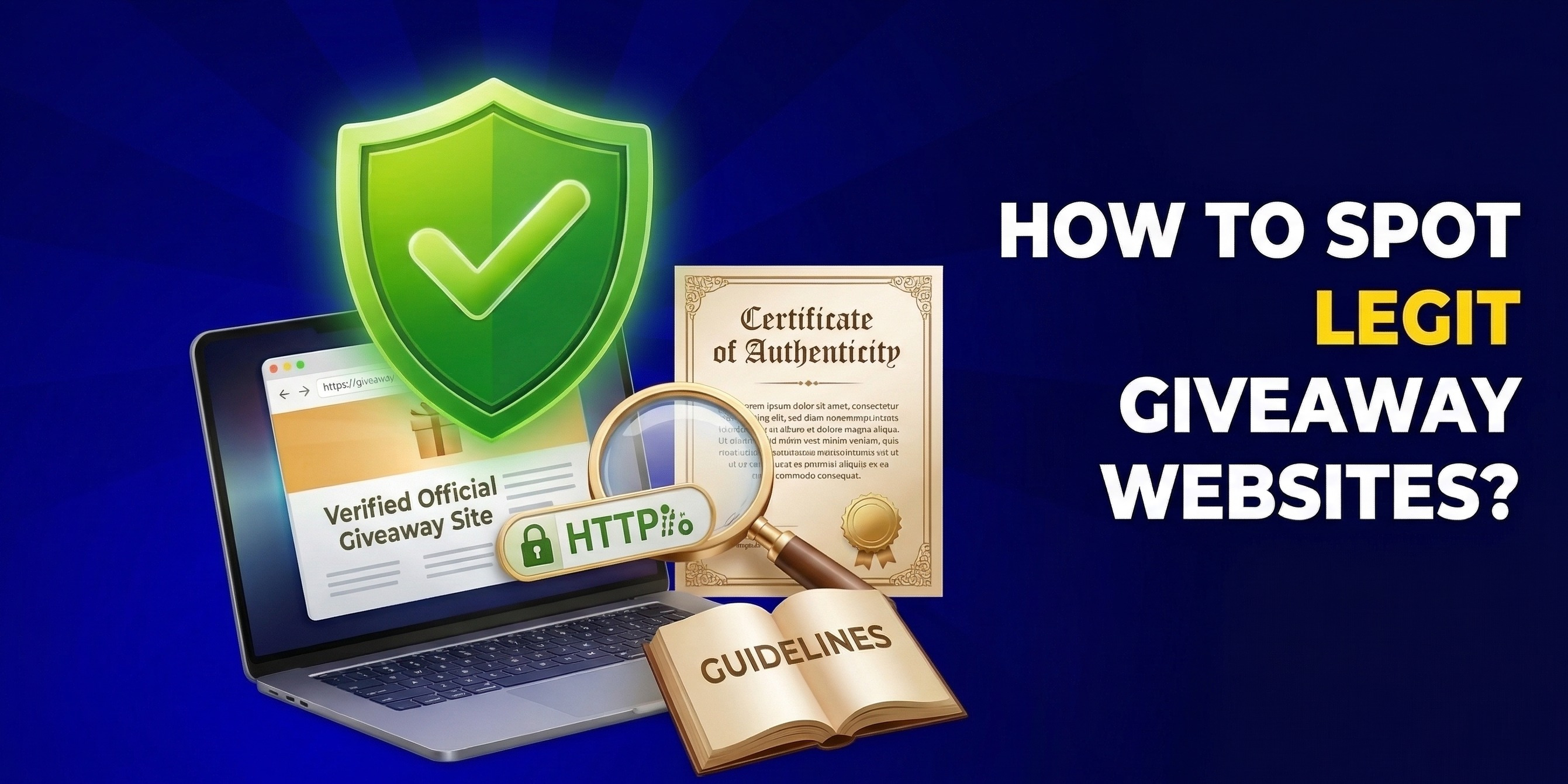
Online competitions are more popular than ever - but so are the scams that target people hoping to win.
Fraudulent websites and fake social media accounts regularly imitate trusted brands, hoping to steal personal information or trick users into making payments. Some are obvious. Others are sophisticated enough to fool even experienced competition entrants.
The good news? Spotting scams isn't difficult once you know what to look for.
This guide will help you identify legitimate UK giveaway platforms, recognise red flags, and protect yourself so you can enter competitions with confidence.
Competition entrants are attractive targets for scammers because:
Scammers exploit this by creating fake competition sites, impersonating real brands on social media, and sending phishing emails disguised as prize notifications.
Understanding their tactics is the first step to protecting yourself.
Here's what to watch out for:
Scammers often register domains that look like legitimate competition brands but include subtle differences:
What to do:
If an offer seems too good to be true, it probably is.
Watch out for:
Legitimate competitions:
Genuine competitions only need basic information to enter - typically your name, email, and contact details.
Red flags:
Rule: You should never pay a fee to claim a prize you've legitimately won.
Legitimate operators provide comprehensive terms and conditions covering:
Trustworthy platforms announce winners publicly - with names, photos, and often videos of prize handovers.
Red flags:
Scammers create urgency to stop you thinking clearly:
Legitimate competitions have clear closing dates and don't pressure you into rushed decisions.
Before entering any competition, do some basic checks:
Legitimate sites provide:
If you can only find a contact form with no other details, that's a warning sign.
Trustworthy platforms explain:
Many legitimate sites publish draw recordings so you can watch winners being selected.
UK prize competitions must offer a free entry option (usually postal entry) to comply with regulations.
Check that:
If the free route is impossible to find or seems designed to discourage use, be cautious.
Look for:
Be wary of sites with no reviews or only generic 5-star ratings.
Legitimate UK operators are registered businesses. You can check:
Even when entering legitimate competitions, protect yourself:
Only provide information that's genuinely needed to enter. Be cautious of forms asking for:
If the form feels excessive, it may be data harvesting.
Create a separate email account for competition entries. This:
If you create accounts on competition sites, use unique passwords for each. Consider a password manager to keep track of them.
Scammers send fake "You've won\!" emails hoping you'll click malicious links or share personal details.
If you receive a winner notification:
If something feels wrong, trust your instincts.
Don't reply, click links, fill in forms, or send money.
Share details in competition communities and forums. Your warning could prevent someone else from being scammed.
If you've shared personal information, watch for:
Consider changing passwords and enabling two-factor authentication where possible.
When choosing where to enter competitions, look for platforms that demonstrate:
✓ Clear terms and conditions - Full details on entry, eligibility, draws, and prizes ✓ Published winners - Real people, real photos, real videos ✓ Transparent draws - Recorded or livestreamed for anyone to watch ✓ Accessible free entry - Clearly explained postal entry option ✓ Secure payments - Recognised payment processors, HTTPS, security certificates ✓ Real contact details - Phone, email, physical address ✓ Responsive support - Quick, helpful answers to questions ✓ Established backing - Operated by recognised, accountable organisations
At Rafflee, we've built our platform around transparency, fairness, and trust. Here's what sets us apart:
Every prize is awarded, no matter how many entries are sold. If the competition runs, someone wins. Always.
Draws happen on time, every time. We don't extend deadlines to sell more entries. When we say the draw is on Friday, it happens on Friday.
We announce all winners publicly - with names, photos, and videos. You can see real people winning real prizes on our website and social media.
Our draws are conducted using verified random selection systems. Many are recorded so you can watch the winner being selected.
We clearly explain how to enter for free via postal entry. It's not hidden or made deliberately difficult.
We use industry-standard encryption and recognised payment processors. Your financial details are protected.
You can reach us by email, and we respond to queries promptly. We're a real business with real people behind it.
Rafflee is operated by Flutter Entertainment, one of the world's largest entertainment companies. That backing means governance, accountability, and security you can rely on.
Browse competitions on Rafflee →
Use this checklist to evaluate any competition site:
If you can't tick most of these boxes, think twice before entering.
Scams exist, but they're avoidable. By knowing what to look for, verifying operators before you enter, and protecting your personal information, you can enjoy competitions safely.
The key is choosing platforms you trust - ones with transparent draws, published winners, and clear accountability.
Rafflee ticks all those boxes. With guaranteed prizes, verified winners, and the backing of Flutter Entertainment, you can enter with confidence.
Browse competitions on Rafflee →









Download Rafflee's .APK file
Use the QR code or link below to start the download
Start installation
Open the downloaded file to start installation and click 'Allow'
Begin using the app
That's it! Enjoy using Rafflee's Android app

 Download .APK ›