
-17640759200799.webp?v=1764075920)
5 min read | Uploaded on February 11, 2026
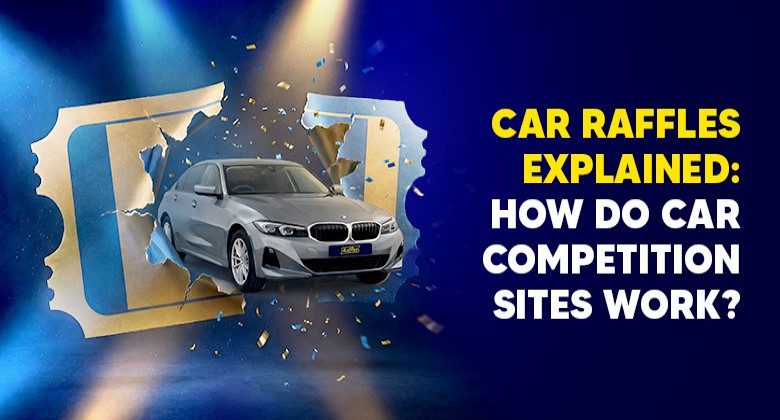
Car competitions give you the chance to win a new vehicle. Instead of paying full price at a dealership, you buy low-cost entries for a chance to win. One entry is drawn at random, and the winner drives away with the car.
It really is that simple.
Car competitions have exploded in popularity across the UK over the past few years. In this guide, we'll explain how they work, what makes them legitimate, and how to enter safely.
Car competitions are your chance to win a new car - sometimes brand new, sometimes used, depending on the competition.
Here's how they typically work:
Before you enter, you'll see all the key details upfront: the car on offer, how much entries cost, how many are available, and when the draw takes place. This transparency is what separates legitimate car competition sites from the rest.
The cars themselves vary widely. You might see a brand-new BMW, a Range Rover, an Audi, or a performance car like a Porsche. Some competitions offer everyday cars; others go for dream machines. It all depends on the platform and the competition.
So why have car competitions taken off in the UK? A few reasons:
Instead of spending £30,000 or more on a car, you can enter a competition for a few pounds - sometimes even less. Entries on Rafflee start from just 15p. That makes winning a dream car genuinely accessible to anyone.
You can browse competitions, buy entries, and check results from your phone. No need to attend events, fill out paper forms, or post anything. Everything happens online, instantly.
The best platforms publish draw dates, entry numbers, and winner announcements. You can see real people winning real cars - with photos, videos, and verified stories. It's not just marketing; it's proof.
Trusted car competition sites guarantee that every prize is given away, no matter how many entries are sold. If the competition runs, someone wins. Always.
Most car competition sites follow a similar process. Here's what to expect:
The platform lists a car, sets the entry price, and publishes the draw date. You'll see exactly how many entries are available and when the competition closes.
Choose how many entries you want and pay online. You'll receive a confirmation email with your unique ticket number (or numbers, if you bought multiple entries).
Once all entries are sold - or the draw date arrives - no more entries are accepted. The competition is locked.
A winner is selected at random. This is usually done using a random number generator or a supervised live draw. Many platforms record or livestream the draw so you can watch it happen in real time.
The winner is contacted directly, then announced publicly on the platform and social media. The car is either delivered to the winner or collected from a handover event.
That's it. No hidden steps, no complicated processes.
Legitimate car competitions follow clear rules to stay fair and legal. Here's what to look for when deciding whether to enter:
Every competition should publish full T&Cs explaining how entries work, how winners are selected, and how prizes are delivered. If you can't find this information easily, that's a warning sign.
Winners should be chosen using a random number generator or supervised draw - not hand-picked. The best platforms record or livestream their draws so you can see the selection happen fairly.
Trusted sites use recognised payment processors like Stripe or PayPal and display security certificates. Your card details should never feel at risk.
If a platform doesn't announce winners publicly, be cautious. Legitimate sites share winner names, photos, and often video proof of prize handovers. This isn't just marketing - it's accountability.
Some less reputable sites extend draws until they've sold enough entries. Trustworthy platforms commit to their draw dates and stick to them, regardless of how many entries have been sold.
Entering a car competition is straightforward. Here's the typical process:
Most platforms also offer a free postal entry option if you'd prefer not to pay. Details of how to enter for free are usually in the competition's terms and conditions.
Trust comes down to proof. The best car competition sites earn trust by doing the following:
Names, photos, and videos of real people collecting their cars. Not stock images - actual winners.
Video evidence of winners being selected fairly, so you can see exactly how it happened.
A real business address, phone number, and email. Not just a contact form buried in the footer.
Guaranteeing that every competition results in a winner, regardless of how many entries were sold.
Platforms backed by established companies offer an extra layer of security and accountability.
At Rafflee, we run car competitions differently. Here's what sets us apart:
Every prize is awarded, no matter what. If the competition runs, someone wins.
Draws happen on time, every time. When we say the draw is on Friday, it happens on Friday. No delays, no excuses.
Every winner can choose to take a cash alternative instead of the car. Win a BMW but prefer the money? No problem.
We announce all winners publicly with photos and videos. Real people, real wins, real proof.
Our low entry costs mean everyone has a genuine chance to win. You don't need to spend a fortune to enter a car competition.
Rafflee is operated by Flutter Entertainment, one of the world's largest entertainment companies. Your entries, payments, and data are secure.
Browse live car competitions on Rafflee →
Car raffles are a genuine way to win your dream car without spending a fortune. The key is choosing a trusted platform with transparent draws, guaranteed prizes, and real winner stories.
Rafflee ticks all those boxes - and with entries starting from just 15p, there's never been a better time to enter.




Download Rafflee's .APK file
Use the QR code or link below to start the download
Start installation
Open the downloaded file to start installation and click 'Allow'
Begin using the app
That's it! Enjoy using Rafflee's Android app

 Download .APK ›