
-17640759200799.webp?v=1764075920)
5 min read | Uploaded on April 22, 2026
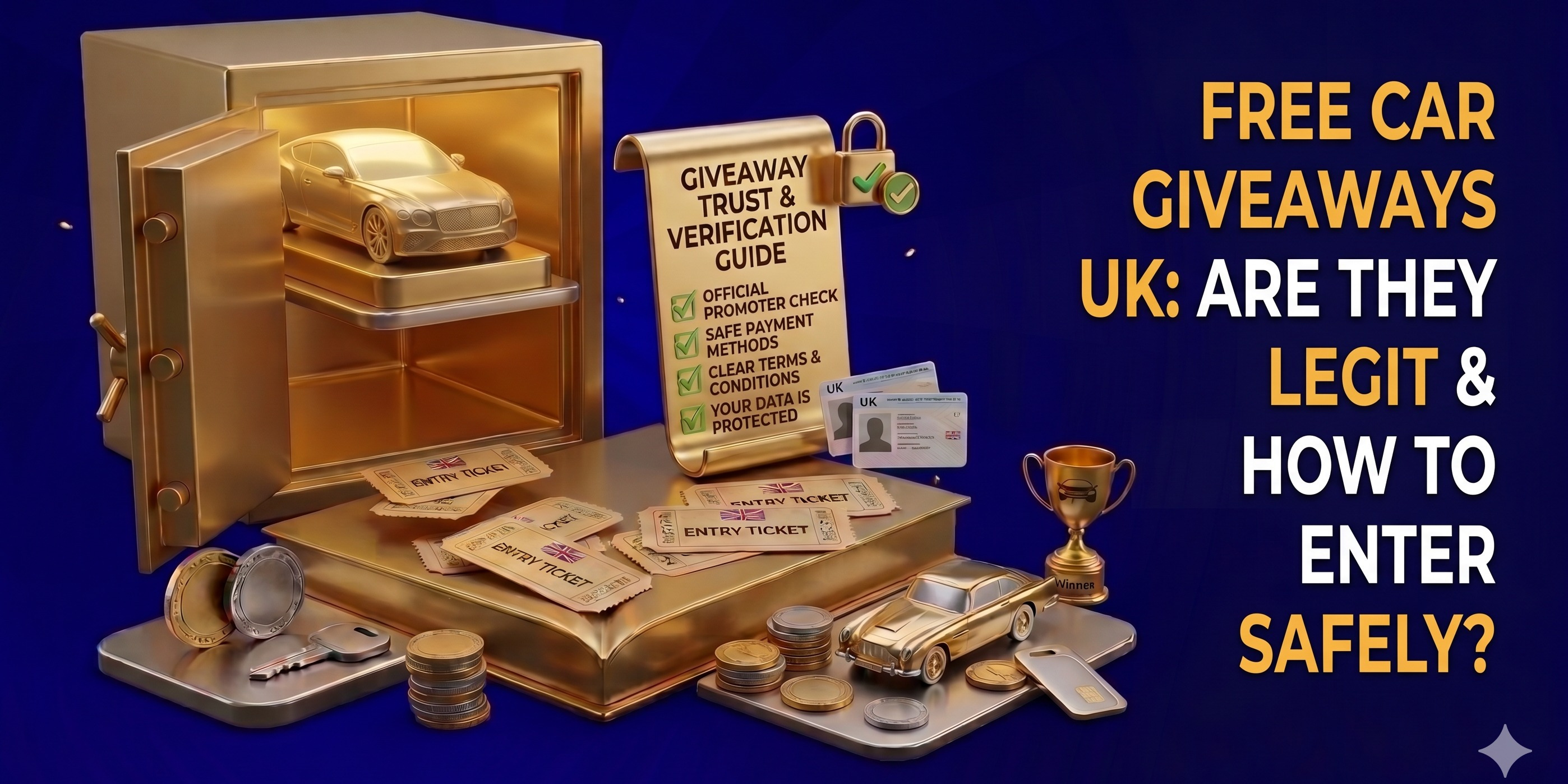
Free car giveaways in the UK sound almost too good to be true, and sometimes they are. While legitimate promotions do exist, many are misunderstood or poorly explained. Knowing how these giveaways work, and how to spot the real ones, is essential before entering.
This guide explains the legal structure behind free car giveaways, where to find genuine opportunities, and how to enter safely without risking your time or personal data.
In the UK, giveaways fall into three main categories:
Free draws and prize competitions are both legal and do not require a gambling licence, as long as they follow strict rules.
A promotion qualifies as a free draw if:
Some large-scale promotions offer cars as secondary prizes alongside bigger giveaways (like houses or cash).
1. Charity‑linked draws
Some draws run by charitable organisations or partnered operators include cars as either main or secondary prizes in their competitions. For example, Omaze offers luxury cars as early bird prizes in its Million Pound House Draws. No purchase is necessary as entrants can enter for free via post. Always verify the charity partner and confirm that the competition is a prize competition rather than a lottery.
2. Brand and dealer promotions
Car manufacturers, dealerships and automotive media outlets sometimes run promotional free draws to increase brand awareness. These draws may coincide with model launches or motor shows. They typically require entrants to fill out a form and occasionally answer a simple question. Ensure there is no hidden purchase requirement and check the promotional terms for eligibility and data use.
3. Online competition sites’ free draws
Many car competition sites feature free entry competitions alongside paid draws. These may involve smaller prizes or low‑value cars to attract new entrants. Operators still require you to answer a skill question or provide contact details, and the free draw runs under the same terms as paid competitions. Check that the free draw is promoted prominently and not hidden within the site.
Research the company’s registration, independent reviews and social media presence. CarCompetitionHub stresses checking for company details, past winner videos and independent reviews before entering. Legitimate free draws usually have a track record of awarding prizes.
If a competition promises a high‑value supercar without any context, it may be a scam. Unrealistic prizes are a red flag. Look for details such as car make, model, year, mileage and condition.
If the promotion also offers paid entries, the free route must be equally convenient and clearly described. Avoid competitions where the free route requires extra effort or hidden costs.
Legitimate free giveaways request minimal personal information. Beware of forms that ask for payment details or sensitive data. The Guardian emphasises providing only necessary information and never paying to claim a prize.
Free draws often attract thousands of entrants, resulting in long odds. Manage expectations and treat participation as a fun bonus rather than a guaranteed way to win a car. Avoid oversharing your personal details or engaging with unknown operators.
Free car giveaways can be exciting, but only if you understand how they work. By recognising the difference between free draws and competitions, verifying organisers, and checking for realistic prizes, you can avoid scams and enter with confidence.
While the odds are often long, the key is to stay informed, protect your data, and only engage with transparent platforms.
If you’re ready to try your luck, start with trusted competitions that clearly display their terms, winners, and free entry options.



Download Rafflee's .APK file
Use the QR code or link below to start the download
Start installation
Open the downloaded file to start installation and click 'Allow'
Begin using the app
That's it! Enjoy using Rafflee's Android app

 Download .APK ›